
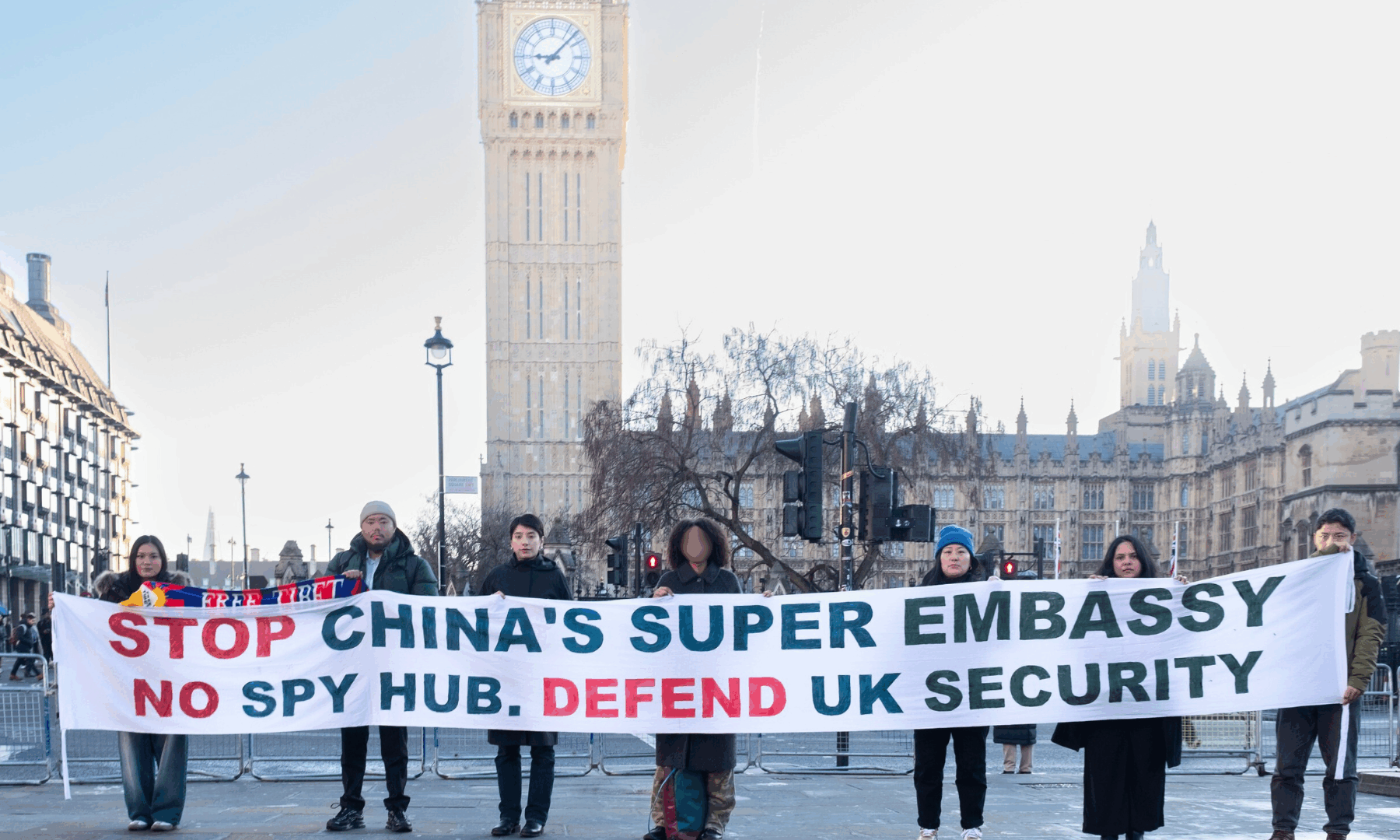
China Mega Embassy Approved Despite Opposition
Free Tibet has been actively campaigning against the embassy, alongside the Tibetan Community in Britain, Uyghurs, Hong Kongers, Chinese diaspora communities, and local residents.
The UK government has granted planning permission for China’s mega-embassy project at the historic Royal Mint Court in Tower Hamlets, London. The decision, made public yesterday, comes despite widespread opposition from Free Tibet, Tibet support groups, diaspora communities, local residents, MP’s, and even foreign governments.
Free Tibet has been actively campaigning against the embassy, alongside the Tibetan Community in Britain, Uyghurs, Hong Kongers, Chinese diaspora communities, and local residents, and the fight-back has already begun. Just hours after the planning decision was made public yesterday, a crowdfunding campaign for a judicial review of the decision exceeded its target goal, and continues to increase.
“Approving a vastly expanded Chinese mega-embassy in the heart of London will drastically increase the Chinese state’s capacity for transnational repression on UK soil, in ways our communities have not yet experienced. This embassy is not just a building – it is a warning about who this country is willing to stand up for, and who it is prepared to abandon.”
Tenzin Rabga
Campaigns Lead, Free Tibet
The Royal Mint Court site, which was given diplomatic consent in 2018 by the then Foreign Minister Boris Johnson, sits in a key strategic and historic location near the Tower of London. This has caused significant concern for UK national security and the safety of Tibetans, Uyghurs, Hong Kongers and others in the diaspora living in the UK.
Independent security experts, cross-party MPs and governments, including the USA, Switzerland, and Netherlands, have raised strong concerns that the embassy will be used as a base for espionage. The close proximity of sensitive financial communication cabling, just one metre from the site, could be intercepted, compromising national security.
“The UK govt decision to green-light the People’s Republic of China’s new diplomatic headquarters at Royal Mint Court is not just a planning failure. It’s a moral capitulation that has prioritised diplomatic expediency over national security and human rights.”
Chris Law MP
Chair of the All Party Parliamentary Group on Tibet
Last week, an impassioned and unusually unified debate took place in the House of Commons following the publication of unredacted plans for the proposed Chinese embassy at Royal Mint Court, revealing secret rooms and proximity to vital security infrastructure. However, despite the grave national security concerns of the site, the government was represented by Planning and Housing Minister Matthew Pennycook, who was unwilling to comment on questions of national security.
MPs from all parties repeatedly stressed that the decision over the embassy is a political and national security question. As such, the choice to put forward only a Housing and Planning Minister was met with criticism from MPs and the Speaker of the House who stated: “I would have thought it would have been someone from the Home Office and the Minister for Security.”
Rushanara Ali, Labour MP for Bethnal Green and Stepney where the embassy site is located, said that she has written to the Secretary of State for Housing, Communities, and Local Government with particular reference to the area as one of the largest Muslim populations in the country, saying: “We are all aware of the persecution of Uyghur Muslims, which this House has campaigned against, among wider human rights violations.”
“We stand at a very dangerous crossroads. I cannot believe we would want to be so out of step with our allies to allow a Chinese super embassy.”
Lord David Alton
House of Lords & House of Commons Committee on Human Rights
Outside of the halls of power, China has been furthering a campaign of transnational repression against those the Chinese Communist Party (CCP) sees as opponents. For Tibetans, Uyghurs, Hong Kongers, and other diaspora groups living in the UK it is feared that this approval may embolden the CCP to step-up this programme of stalking, harassment, and threats.
Such repression has already escalated to physical violence, such as in 2022 when a Hong Kong protester was dragged into the Chinese consulate in Manchester and assaulted. There are also reports that bounties have been issued by Chinese authorities against UK-based activists.
“My community already faces escalating harassment and intimidation from Chinese agents on a regular basis; right here on UK soil. This decision will simply embolden those who seek to repress and silence us. I condemn the decision outright. My safety and that of my community is now under even more threat in a city we thought would give us safety.”
Tashi Lahmu
Voluntary Tibet Advocacy Group UK
Despite this decision from the UK government, groups across the UK are determined to continue to press the issue. With the Royal Mint Court Residents Association – who currently live at the embassy site – crowdfunding for legal representation to take the issue to judicial review, we are not stopping our action either. Free Tibet, Tibet support groups, and diaspora communities are standing in solidarity with the Royal Mint Court residents, and encouraging donations to the legal fund.
We are exploring all options to continue fighting the decision, to bring to light and challenge the influence that the CCP hold in UK politics.