Arson Attack on Dalai Lama Representative’s Office in South Africa
Dalai Lama representative in South Africa narrowly escapes second arson attack on home and office
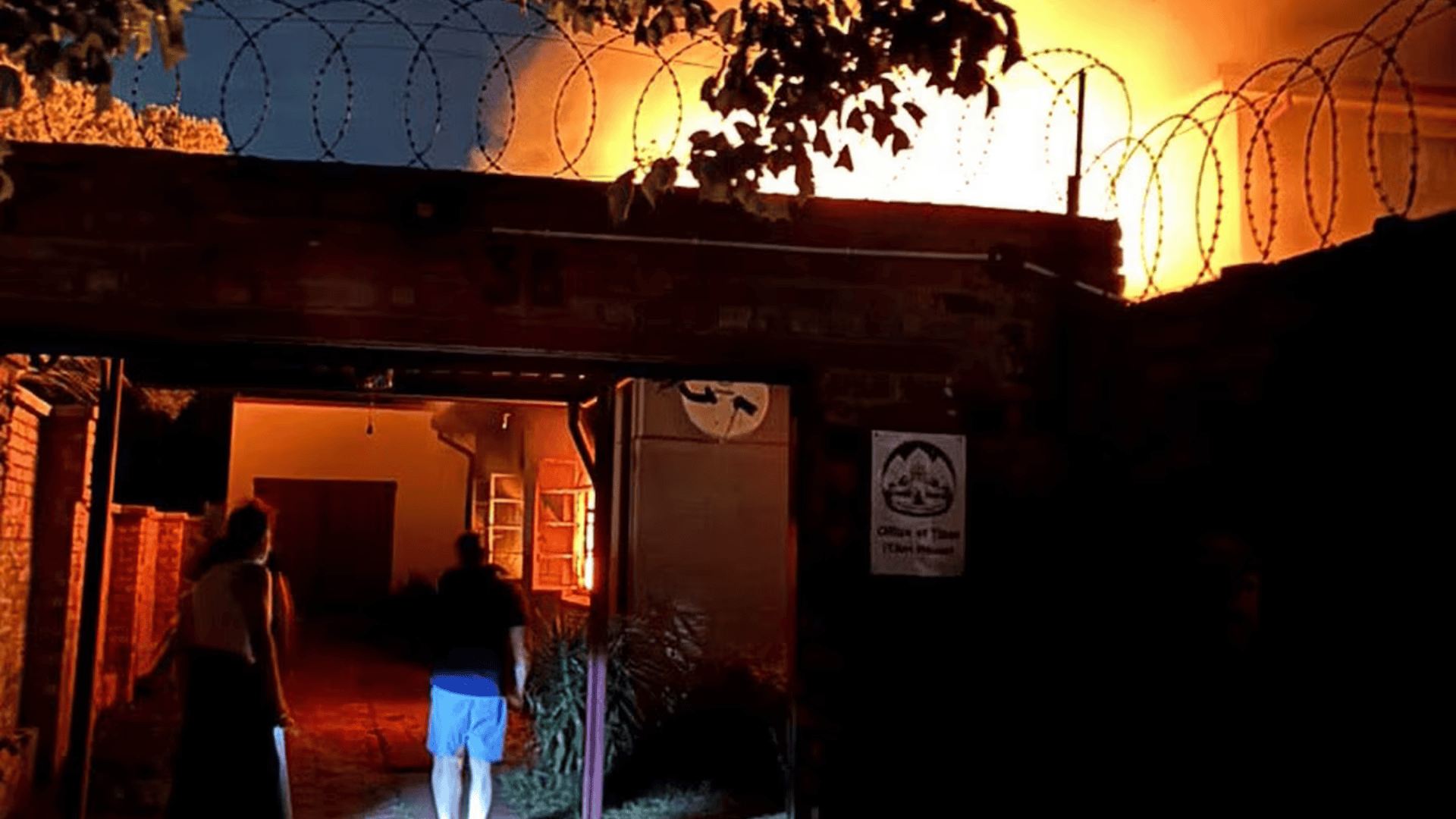
The Dalai Lama’s Representative in South Africa, Dhundup Gyalpo, narrowly escaped with his life when his combined home and office was firebombed late at night on 14 October.
In a video recording, Dhundup Gyalpo documented the extensive destruction to his home and office in Lyttelton Manor, Centurion, south of Pretoria, showing the devastation in the aftermath with paperwork reduced to ashes. The building is now uninhabitable.
It was the second petrol-bomb attack on the property this year, after three petrol bombs were thrown towards the house on the night of 6 July, the Dalai Lama’s 91st birthday, an attack that had not been made public at the Representative’s request until this week.
This attack was different – while the bombs were thrown towards the house in July, on Wednesday night at around 11.15 pm, the fire-bombs were thrown through the windows, with the sound of shattering glass waking Dhundup Gyalpo. He opened his bedroom door, saw the house was filled with smoke, so he smashed the bedroom window and climbed out of the house.
South African police have opened an arson case but are yet to make any arrests, while Representative Dhundup Gyalpo told South African media that it is believed there are “larger political forces that are at play here”. “This time they entered our office compound and threw them straight into our windows. It was a deliberate attempt to make sure the Molotov cocktail went straight to our room. So, it was a deliberate attempt to cause harm. It wasn’t an attempt to steal or rob something. Which means that people who were doing this, they were definitely trying to convey a political message, right?” he told the Daily Maverick.
The spiritual teacher of the office had been sleeping in an adjacent cottage, which had not been damaged. The Central Tibetan Administration in Dharamsala has briefed Tibetan and other media with their grave concerns about the unprecedented attacks on the physical safety of representatives of the Dalai Lama and Tibetan exile authorities.
Dhundup Gyalpo told South African media that he suspected political forces, without naming any country, saying: “It’s quite clear we have nothing against the people of South Africa, and South African people have nothing whatsoever against us. Only [a] few know about the situation of Tibet, and they were largely sympathetic.” He added that the Office was not involved in anything that might compromise the South African government politically, saying: “I am here as a representative of His Holiness the Dalai Lama. My main task is [the] promotion of His Holiness’s views about nonviolence, peace and compassion.”
Tenzin Rabga Tashi of Free Tibet said: “This is an appalling and disturbing attack and we stand in solidarity with His Holiness’ representative in South Africa. We admire his courage in seeking to go on with his work to promote the Dalai Lama’s peaceful mission with the people of South Africa, so many of whom will be equally shocked by this attack. Together with Tibet supporters across the world, we call on the South African police and government to do everything in their power to investigate this latest attack and ensure the safety of Representative Dhundup Gyalpo and his staff.”
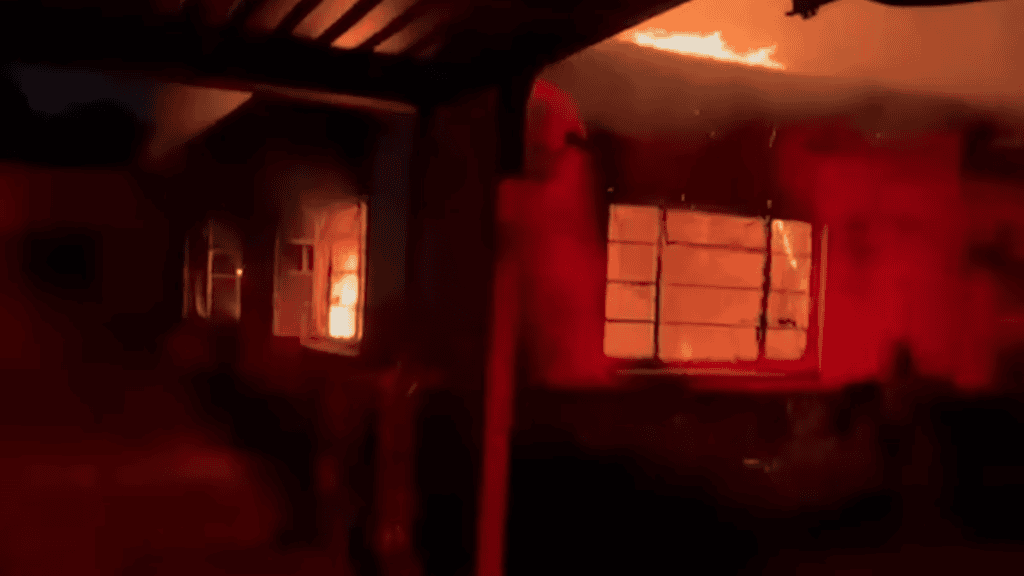
Photo by Dhundup Gyalpo (via Daily Maverick)
A Tibet office in difficult circumstances: China’s pressure on South Africa
The Office of Tibet in South Africa opened in 1997, with the approval of Nelson Mandela’s government, following a request from the Dalai Lama in 1996. It covers the African continent, has no diplomatic status and is classified as an NGO. Dhundup Gyalpo, who had previously served in the Bureau of the Dalai Lama in Delhi and the Tibet office in Taipei, took up the post as Representative in March, and lives and works on the same premises in Centurion.
Beijing has openly pressed the South African government in Pretoria over Tibetan representation, with the government acquiescing to demands on several occasions.
South Africa switched diplomatic recognition from Taipei to Beijing in January 1998, months after the Office of Tibet opened. In a 2024 parliamentary reply, the foreign ministry said that agreement commits it to recognising the People’s Republic as the sole legal government of China, ‘including the regions of Tibet, Hong Kong and Macau’. Since late 2023, it has ordered Taiwan’s de facto embassy out of Pretoria to Johannesburg, and when Taipei resisted, the authorities rebranded it a trade office. Like the Office of Tibet, it is a non-diplomatic mission representing an entity Beijing opposes.
China is now South Africa’s largest trading partner, while the ANC has sent cadres to Chinese Communist Party training academies. In 2018 a previous secretary-general was quoted as telling staff the party could ‘learn a lot from the Chinese on issues of strategy and propaganda’, though party spokespeople distanced themselves from the remark. “This is the story of big money and big influence,” wrote journalist Ufrieda Ho in the South African Daily Maverick in 2018. “China has become South Africa’s largest trading partner over 20 years. In contrast, the story of Tibet is subdued, almost forgotten really.”
In 2009 the government refused the Dalai Lama a visa for a peace conference hosted by Mandela, Tutu and de Klerk. A Chinese embassy official confirmed to the South African Press Association that Beijing had warned that admitting him would harm bilateral relations. He was again kept out in 2011, for Tutu’s 80th birthday, and in 2014, when the World Summit of Nobel Peace Laureates in Cape Town collapsed after laureates withdrew in protest.
In 2018, when the then Tibetan Sikyong Lobsang Sangay visited, the Chinese embassy protested formally. But his lecture still went ahead according to the CTA, with the Inkatha Freedom Party – historically the Tibetan cause’s main political ally in South Africa – condemning the Chinese embassy’s conduct.
South Africa has not simply lined-up behind Beijing at the United Nations. In September 2022 at the Human Rights Council, China’s representative delivered a joint statement rejecting the UN human rights office’s assessment of Xinjiang. Close to half of its signatories were African states, but South Africa did not sign. Nor did it join Western criticism of China. On human rights in China, its pattern has been silence rather than endorsement.
None of this establishes who carried out the attacks on the Dalai Lama’s office outside Pretoria, but it does show the challenging – and clearly, now dangerous – circumstances for Tibetan representatives in South Africa in a global environment of heightened transnational repression by China.